













What is Tinnitus and its origins?

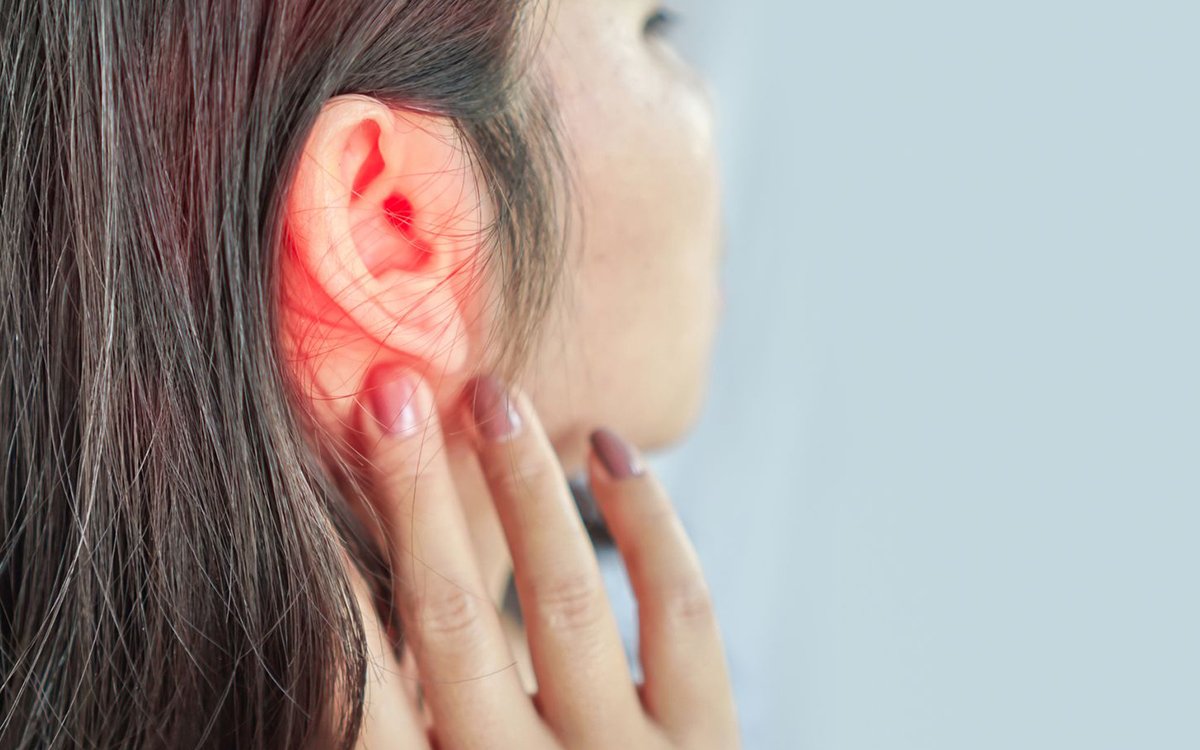
Tinnitus is a common condition characterized by the perception of sounds such as ringing, buzzing, or hissing in the ears or head, even when there is no external sound source. Tinnitus is a symptom, not a disease in and of itself. While it is rarely related to serious health problems, it can have a significant impact on one’s quality of life by impairing attention, sleep, and emotional well-being.
According to data from the United States, over 50 million people, or roughly 15% of adults, report having tinnitus, with 20 million suffering from chronic tinnitus that seriously disrupts their everyday life. Tinnitus is not confined to certain age groups; it can affect people of all ages, but it is more frequent in older adults, with studies showing that about 30% of individuals aged 65 and up report having tinnitus. According to research, at least 20% of people who suffer with tinnitus seek medical counsel or treatment, underscoring the condition’s importance as a health issue.
Tinnitus can cause various hearing symptoms. People with tinnitus may describe the following sounds:
- Ringing: This is the most commonly reported type of tinnitus, where individuals perceive a consistent ringing sound in one or both ears.
- Buzzing: Some people describe the sensation as a low or high-pitched buzzing sound, similar to the noise of a bee.
- Hissing: This type resembles the sound of a hiss or the noise produced by steam or escaping air.
- Roaring: A deep, continuous noise that some individuals liken to the sound of the ocean or a heavy waterfall.
- Clicking: A sound that resembles temporal clicking or popping noises, which may be rhythmic or sporadic.
- Whistling: This type involves a high-pitched whistling sound that can vary in intensity.
- Chirping: Similar to the sound made by crickets or birds, this sensation can be perceived as a series of quick, repetitive sounds.
- Static: Often described as a sound similar to radio static or white noise, providing a sense of background noise.
- pulsating or throbbing: Some individuals experience rhythmic sounds and in sync with their heartbeat, often referred to as pulsatile tinnitus, which may suggest an underlying vascular issue.
Tinnitus is experienced differently by each individual, with variations in pitch, volume, and the specific features of the sounds detected. The perception of these noises can also shift over time, depending on stress, weariness, and ambient noise. Tinnitus has a variety of causes. The actual cause is sometimes unknown; however, primary tinnitus is commonly related to sensorineural hearing loss, which is caused by damage to the inner ear or auditory pathways leading to the brain. This type of hearing loss is caused by a variety of factors, including prolonged exposure to loud noises, age-related changes in the auditory system, and ear infections. Secondary tinnitus, on the other hand, is induced by identifiable sounds that originate near or near the eardrum. This variant is a rare condition, accounting for less than one percent of all tinnitus cases. Secondary tinnitus is frequently caused by vascular or neuromuscular diseases, such as high blood pressure or blood vessel abnormalities, which produce tinnitus-like sounds. Tinnitus can be categorized in several ways. It could be subjective, meaning that only the individual hears the sound, or objective, indicating that an examiner can hear it using specialized equipment. Tinnitus can be classified as primary or secondary based on its origin. It is also distinguished by its duration: some people have transient tinnitus, while others have chronic symptoms that last months or even years. Understanding the difference between bothersome and non-bothersome tinnitus is crucial for effective treatment. While some people regard tinnitus as insignificant and ignored, others find it persistent and irritating. Tinnitus can create communication issues, anxiety, difficulties concentrating, and sleep disturbances. Tinnitus management methods vary according to the severity and impact on the patient’s life. General practitioners may do audiometric testing to assess the individual’s hearing abilities and address any underlying concerns.
| Table 1. Tinnitus definitions | |
| Type of tinnitus | Definition |
| Subjective tinnitus | Only the affected individual can hear the sound |
| Objective tinnitus | The sound can also be heard by the examiner (eg, crepitus of the temporomandibular joint, bruit of vascular malformation) |
| Pulsatile tinnitus | Tinnitus that is described as producing a sound of regular pulsations. This may be subjective or objective |
| Primary tinnitus | Tinnitus that is idiopathic and may or may not be associated with sensorineural hearing loss (SNHL). The SNHL should be symmetrical |
| Secondary tinnitus | Tinnitus associated with a specific underlying cause (other than symmetrical SNHL) |
| Acute or recent onset tinnitus | Apparent for <6 months |
| Chronic tinnitus | Apparent for >6 months |
Subtypes of Patients with Tinnitus
Tinnitus can be classified similarly to hearing loss as either conductive or sensorineural. Conductive hearing loss occurs when an object blocks or damages the outer or middle ear, preventing sound from reaching the inner ear. Sensorineural hearing loss, on the other hand, is caused by destruction to the cochlea’s structures, such as hair cells, cochlear synapses, spiral ganglion neurons, or other central auditory pathways. Tinnitus can be caused by any alteration to the auditory system.
Conductive Tinnitus
Conductive tinnitus is a type of ear ringing that results from problems with sound transmission from the outer or middle ear to the inner ear. This syndrome occurs when there are obstructions or dysfunctions that obstruct sound waves, causing varied auditory symptoms such as ringing, buzzing, or a muted impression of external noises. Common causes include ear infections, perforated eardrums, earwax buildup, and structural problems in the ear. Unlike sensorineural tinnitus, which is caused by damage to the inner ear or auditory pathways, conductive tinnitus has a more identifiable cause and is often treatable. Managing the underlying problem is critical to reducing symptoms. For example, if an ear infection or fluid buildup is discovered, adequate medical care or surgery may be required to restore effective sound conduction. Individuals with tinnitus should get professional examination to discover the specific cause. Accurate diagnosis can lead to effective therapies for tinnitus. Many patients have substantial alleviation after receiving timely assistance, emphasizing the necessity of addressing any underlying auditory difficulties as soon as possible. Overall, understanding conductive tinnitus can lead to better management and a higher quality of life for people affected.
Ear Infections
Tinnitus can accompany any type of ear infection. The tinnitus usually goes away after the infection has healed. However, some patients continue to have tinnitus long after the infection has been resolved. One cause could be what is known as “unmasking,” in which tinnitus was already present but not obvious, and the temporary hearing loss or enhanced hearing sensitivity made the person aware of it.
Tympanic Membrane and Ossicular Chain
Middle ear disorders that disrupt sound transmission from the tympanic membrane to the inner ear can induce both conductive hearing loss and tinnitus. These include tympanic membrane perforation, disruption or fixation of the ossicular chain caused by infections, trauma, otosclerosis, or Paget’s disease, as well as chronic otitis media, cholesteatoma, and Eustachian tube issues.
Glomus Tumors
Glomus tympanicum tumors, also known as tympanic paragangliomas, are the most frequent benign tumors in the middle ear. These tumors arise in neural crest tissue and involve cell growth in that location. Paraganglion cells are very vascularized. Glomic tumors typically affect middle-aged women. Clinical signs of tumor invasion on surrounding structures include hearing loss (conductive and sensory), tinnitus (neurosensorial or pulsatile), dizziness, facial palsy, dysphagia, hoarseness, and discomfort.
Myoclonus
Middle ear myoclonus is defined as a rhythmic movement of the tympanic membrane caused by repeated contractions of the tensor tympani and stapedial muscles. Tinnitus is usually unilateral, and the sound may indicate where the myoclonus is located. Tinnitus sounds like a click and a butterfly when it comes from the tympanic tensor muscle, but a buzzing noise comes from the stapedius muscle. The etiology is unknown, but it has been linked to facial paralysis, trauma, vascular issues, infections, demyelinating illnesses, anxiety, and malignancies. Otoscopic examination occasionally reveals rhythmic motions of the tympanic membrane. This unusual subtype of tinnitus does not have a clear explanation, although it is most likely generated by the propagation of muscular contraction noise, which causes vibration in the tympanic membrane during contraction. Tinnitus can be induced by palatal myoclonus, which is caused by the tensor and levator veli palatini muscles. Tinnitus is heard in both ears and manifests as clicks, similar to the sound created when two fingers snap together. The etiology is unknown; however, it could be related to a variety of clinical diseases, including vascular lesions, trauma, infection, multiple sclerosis, or psychogenic, or it could be idiopathic. Direct oral cavity examination allows for the diagnosis of palatal myoclonus. The tinnitus sound could be caused by the eustachian tube popping open or by surface tension releasing as the eustachian tube’s walls open due to peri-tubal muscular movement.
Tonic Tensor Tympani Syndrome
Tinnitus is among the symptoms of tonic tensor tympani syndrome. Other symptoms include ear fullness, tinnitus, tension headache, dizziness, and disorientation. The tensor tympani muscle is 2.0 cm long and inserts into the cartilage section of the eustachian tube. The tensor tympani muscle contracts and pulls the eardrum membrane inwards. Clinically, tonic tensor tympani syndrome is associated with acoustic shock injury, whiplash-related neck pain, and temporomandibular problems. When the tensor tympani remains in a tonic contraction (stationary), tympanic compliance decreases, resulting in reduced transmission of low-frequency acoustic energy through the middle ear. This syndrome’s audiometric characteristic is low-frequency conductive hearing loss, with the possibility of a minor low-frequency sensorineural hearing loss.


