













Understanding Hearing Loss and Its Modern Solutions

Hearing helps people connect with the natural cycles of life. It enables discussions to flow smoothly, music and nature to be completely appreciated, and environmental cues to be recognized for safety and alertness. When hearing begins to deteriorate, changes often emerge quietly—words become less clear, background noise becomes overwhelming, and social interactions become more difficult.
Globally, hundreds of millions of people suffer from hearing loss. More than 430 million individuals have disabling hearing problems today, and this figure is anticipated to climb to 700 million by 2050. While age-related changes have a major impact, long-term exposure to loud noise, ear illness, and other medical disorders also contribute.
Because hearing loss frequently progresses gradually, people may adjust without realizing how much they are missing. Over time, however, these minor alterations have an impact on communication, social involvement, and overall quality of life.
Types of Hearing Loss
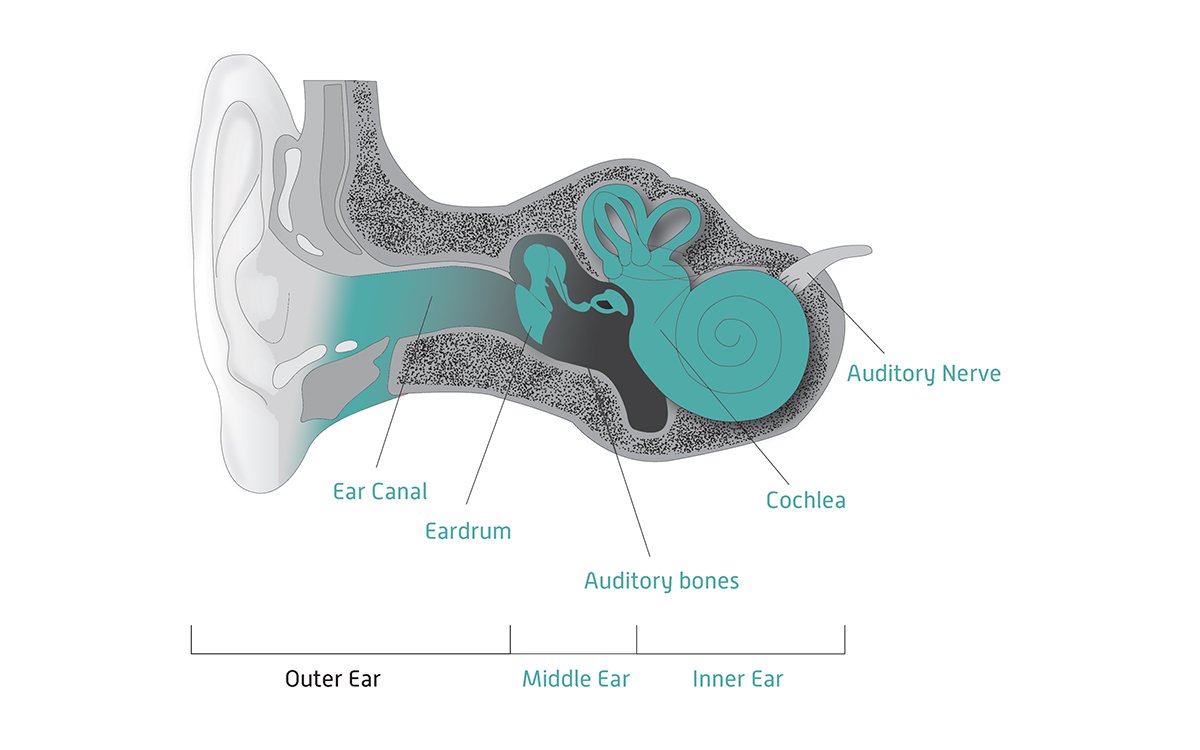
The ear is a complicated organ composed of three parts: outer, middle, and inner. Sound must pass through each to reach the brain. Problems in any portion can impair hearing, and identifying the type of loss is the first step toward appropriate care.
Conductive Hearing Loss
This type happens when sound does not pass efficiently to the inner ear. Causes include earwax buildup, middle ear fluid, infections, eardrum perforation, and bone growth anomalies such as otosclerosis.
Some conductivity losses are transitory and can be effectively treated:
- Removal of earwax or foreign objects can restore hearing immediately.
- Medication may resolve infections or inflammation.
- Surgical repair of the eardrum or middle-ear bones can improve sound transmission.
In circumstances when conductive difficulties cause long-term hearing loss, technology that improves incoming sound allows the inner ear to get a clearer signal, allowing communication to continue.
Sensorineural Hearing Loss
Sensorineural loss is defined as injury to the inner ear (cochlea) or the auditory nerve. It is the most prevalent type of hearing loss and is typically permanent.
Causes include:
- Age-related changes (presbycusis)
- Long-term exposure to loud noise
- Inner-ear infections or viral illness
- Certain medications that affect hearing
- Sudden inner-ear trauma or head injury
When the delicate hair cells inside the cochlea are damaged, sound signals reaching the brain become weaker and less precise. Medical therapy rarely reverses long-term sensorineural loss. Management focuses on delivering sound in a way that matches the ear’s needs, allowing speech and environmental cues to remain accessible in daily life.
Mixed Hearing Loss
Mixed hearing loss includes both conductive and sensorineural components. Someone may experience age-related inner-ear degeneration in conjunction with chronic ear infections, which add a conductive element.
Initial care usually focuses on the treatable aspect, such as draining fluid or healing the eardrum. After medical therapy, continued improvement is based on technology that enhances and clarifies the sounds that the inner ear can still detect.
Recognizing Early Signs of Hearing Loss
Hearing loss usually occurs gradually. People may observe this:
- Conversations in busy restaurants are difficult to follow
- Others seem to mumble or speak softly
- The television or radio needs higher volume
- Group discussions or phone calls are harder to understand
- There is ringing or buzzing in the ears
These early indications frequently occur before a person feels “deaf.” Over time, the extra effort necessary to listen can become exhausting, and some people may avoid social situations where understanding speech is difficult.
Modern Approaches to Hearing Care
Management starts with a complete hearing evaluation. Audiometry, speech testing, and eardrum examinations are used by specialists to establish the kind and severity of the loss. Treatment techniques differ depending on what the tests uncover.
- Medical and Surgical Management
- Earwax removal and infection treatment restore hearing in many temporary cases.
- Surgery can repair the eardrum or correct conditions such as otosclerosis.
- Cochlear or middle-ear implants are options for certain severe losses that do not respond to other methods.
- Rehabilitation and Assistive Tools
- Communication techniques and listening strategies can reduce daily frustration.
- Devices like FM systems, TV streamers, and smartphone apps enhance specific listening situations.
Everyday Sound Support
When hearing cannot be completely repaired through medical or surgical procedures, the emphasis moves to increasing sound reception and processing. By delivering clear, suitably amplified input, daily conversation becomes easier, and environmental awareness improves.
Bringing Everyday Sound Back Into Focus
For many individuals with sensorineural loss, as well as those with mixed or long-term conductive loss, providing a stronger, more precise signal to the ear and brain is the most effective method to keep them engaged with the world.
Modern hearing instruments do this by:
- Amplifying the frequencies where hearing is reduced
- Clarifying speech in both quiet and noisy settings
- Reducing the strain of listening, which often goes unnoticed until relief is experienced
These technologies integrate seamlessly with the auditory system, allowing for natural involvement with conversations, media, and the surrounding environment.
Even modest hearing loss can benefit from early treatment. Consistent availability to sound maintains communication fluidity and prevents the gradual decline into social retreat or listening fatigue.
When Hearing Aids Are Used
Hearing aids are most useful for:
- Mild to severe sensorineural hearing loss
Amplifies specific frequencies and improves speech clarity
- Mixed hearing loss
After treating the conductive portion, hearing aids support the permanent inner ear damage
- Certain permanent conductive hearing losses
Amplification compensates for the mechanical barrier that cannot be fully corrected surgically
Profound deafness, when nearly no sound can be perceived, usually necessitates cochlear implantation rather than traditional hearing aids.
Benefits That Extend Beyond Hearing
Enhanced access to sound offers benefits that affect daily life:
- Easier communication at home, work, and social gatherings
- Lower listening effort, leaving more energy for connection
- Greater awareness of surroundings, improving safety and confidence
- Cognitive engagement, as the brain continues to receive complete auditory information
These devices are a natural part of modern life thanks to their discreet, comfy designs and customizable settings. Wireless streaming, noise reduction, and rechargeable alternatives increase convenience without drawing attention.
Preserving Hearing Health
- Supporting hearing over a lifetime involves protection and proactive care:
- Limit exposure to loud environments and use ear protection when needed
- Keep headphone and earbud volume at safe levels
- Maintain overall health, as conditions like diabetes and high blood pressure affect the inner ear
- Schedule periodic hearing checkups to track changes and adjust care as needed
Reconnecting With Life
Hearing loss may occur gradually, but life does not have to get quieter. Recognizing early alterations, fixing what can be fixed, and utilizing contemporary hearing technology restores access to the sounds that are most important.
Hearing aids restore conversation clarity, music richness, and environmental awareness to people who have sensorineural, mixed, or certain permanent conductive hearing loss.
People can reconnect with family, friends, and the experiences that make life richer by combining professional evaluation, proper care, and today’s modern hearing solutions—ensuring that each day is filled with the sounds that give it meaning.


